

Zoe Marriott on Fan-Fiction vs. Retellings
Wednesday, January 30, 2013
10:12 AM
,
3 Comments
Labels: discussion , fan-fiction , Wicked Sweet Authors
Labels: discussion , fan-fiction , Wicked Sweet Authors
Here's the third post in my series of posts on authors on fan-fiction vs. retelling. Today's authors is one of my favorite fairy-tale retellers: Zoe Marriott!
 What do you consider fan-fiction?
I've always understood fanfiction to be any piece of writing which utilises a world or characters that already exist (in whatever form) under copyright to the original author. So, for example, if I were to feel a sudden passionate need to write a new version of Twilight from Jasper's point of view, in which Jasper actually does bite Bella at the birthday party and then the two of them fall in love and Edward goes insane and joins up with Victoria to bring a newborn army to forks, that would be fanfiction. What makes it fanfic is that you're playing with fictional elements which legally and morally belong to another person. That other person may not mind - I certainly don't! - but you're still only borrowing, because no matter what you do, the author is the only one who has the right to change the 'canon' or profit from those creations.
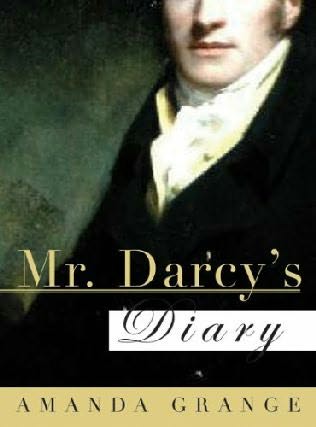
Something is not fanfic if the world and characters that you use are out of copyright - if they no longer belong to someone else. If I decide to write a new take on Pride and Prejudice in which Darcy is an emotionless cyborg and Lizzie is the brilliant mechanic who installs his Heart Chip, that would be a retelling rather than fanfic, because Lizzie and Darcy, and the plot that binds them together, and their fictionalised Regency universe, are all out of copyright and no longer belong to anyone. As a reteller, I still can't change the canon of the original story. But since the author isn't able to profit anymore from that world and characters, it's OK if I do.
 Do you consider your book to be fan-fiction? If not, what sets it apart from your definition?
I don't think that fairytale retellings count as fanfic, no. Firstly, folklore and fairytales are not only not under copyright - they've never been under copyright to anyone (not even the brothers Grimm, or H.C. Andersen, although they of course owned their personal takes on those stories) because they're part of a tradition of oral storytelling that stretches back hundreds of years, and those stories have already been told and retold more times than any human could count. In a very real way, the folklore and myths of each individual culture form a part of the identity of its people, and those stories are a birthright, to be dipped into at will. Fairytales and folklore form archetypes, and there's a part of the human brain which is hardwired to seek out and respond to those elemental archetypes. We see the same story shapes and the same kinds of characters crop up over and over again because of that. Cinderella, for instance. There's a Cinderella element in Twilight and one in Pride and Prejudice. That doesn't even make those stories retellings, let alone fanfic. People have been retelling and re-imagining folklore and myths and fairytales in their own ways since we started painting on cave walls. The term fanfic has only existed for about fifty years. I think it's a bit presumptuous to come along and slap that label on stuff which has been a natural part of our cultural evolution for millenia.
Based on your definition, should fan-fiction ever be published?
This is a tougher one. It's in the nature of creative work that you take inspiration from all kinds of sources. There are books of mine which couldn't exist if I hadn't taken inspiration from other books (ME: Argh, I can't believe the author did that to her strong girl warrior! I'm going to write a strong girl warrior of my OWN and mine won't turn into a wimp!) or films, or music, or pieces of art. There's nothing mortally wrong with this process. West Side Story wouldn't exist without Romeo and Juliet. Some of Shakespeare's plays wouldn't exist without the work of Marlowe. My The Name of the Blade Trilogy wouldn't exist without the Robert Graves poem 'The Bedpost'. Cassandra Clare's The Infernal Devices series might not exist without A Tale of Two Cities. And I've read fanfic which diverged so wildly from its source material that it felt exactly the same - like original fiction which had merely taken a spark of inspiration from something else.
 Any work of original fiction which started life as fanfiction can't legally be published unless someone comes along and 'files off the serial number' so to speak. If that's merely a case of (for example!) removing the names Edward and Bella from your all-human, zany, college comedy, and if no one would ever guess that the book was originally inspired by Twilight unless you told them, then I think it's OK. You're not profiting from someone else's work there, but from your own original creations - creations which were merely sparked to life by your reaction to the source material. But I think if your characters are exactly the same as the source characters, and anyone reading your work could see exactly where those serial numbers have been filed off - and most especially if your new book is *promoted* using the fact that it used to be fanfic, and benefits from that - well, then morally you may be on thin ice, even if you can get away with it legally.
The true test, I think, is that fanfiction relies on the reader having familiarity with the original material. It falls flat or feels nonsensical to readers that don't. Original fiction, even fiction that was inspired by another work, can stand alone. It's strong enough - it's characters and world and plot are strong enough - to mesmerise a reader who has never read the story from which the inspiration was drawn.


I've always understood fanfiction to be any piece of writing which utilises a world or characters that already exist (in whatever form) under copyright to the original author. So, for example, if I were to feel a sudden passionate need to write a new version of Twilight from Jasper's point of view, in which Jasper actually does bite Bella at the birthday party and then the two of them fall in love and Edward goes insane and joins up with Victoria to bring a newborn army to forks, that would be fanfiction. What makes it fanfic is that you're playing with fictional elements which legally and morally belong to another person. That other person may not mind - I certainly don't! - but you're still only borrowing, because no matter what you do, the author is the only one who has the right to change the 'canon' or profit from those creations.
Something is not fanfic if the world and characters that you use are out of copyright - if they no longer belong to someone else. If I decide to write a new take on Pride and Prejudice in which Darcy is an emotionless cyborg and Lizzie is the brilliant mechanic who installs his Heart Chip, that would be a retelling rather than fanfic, because Lizzie and Darcy, and the plot that binds them together, and their fictionalised Regency universe, are all out of copyright and no longer belong to anyone. As a reteller, I still can't change the canon of the original story. But since the author isn't able to profit anymore from that world and characters, it's OK if I do.

I don't think that fairytale retellings count as fanfic, no. Firstly, folklore and fairytales are not only not under copyright - they've never been under copyright to anyone (not even the brothers Grimm, or H.C. Andersen, although they of course owned their personal takes on those stories) because they're part of a tradition of oral storytelling that stretches back hundreds of years, and those stories have already been told and retold more times than any human could count. In a very real way, the folklore and myths of each individual culture form a part of the identity of its people, and those stories are a birthright, to be dipped into at will. Fairytales and folklore form archetypes, and there's a part of the human brain which is hardwired to seek out and respond to those elemental archetypes. We see the same story shapes and the same kinds of characters crop up over and over again because of that. Cinderella, for instance. There's a Cinderella element in Twilight and one in Pride and Prejudice. That doesn't even make those stories retellings, let alone fanfic. People have been retelling and re-imagining folklore and myths and fairytales in their own ways since we started painting on cave walls. The term fanfic has only existed for about fifty years. I think it's a bit presumptuous to come along and slap that label on stuff which has been a natural part of our cultural evolution for millenia.
Based on your definition, should fan-fiction ever be published?
This is a tougher one. It's in the nature of creative work that you take inspiration from all kinds of sources. There are books of mine which couldn't exist if I hadn't taken inspiration from other books (ME: Argh, I can't believe the author did that to her strong girl warrior! I'm going to write a strong girl warrior of my OWN and mine won't turn into a wimp!) or films, or music, or pieces of art. There's nothing mortally wrong with this process. West Side Story wouldn't exist without Romeo and Juliet. Some of Shakespeare's plays wouldn't exist without the work of Marlowe. My The Name of the Blade Trilogy wouldn't exist without the Robert Graves poem 'The Bedpost'. Cassandra Clare's The Infernal Devices series might not exist without A Tale of Two Cities. And I've read fanfic which diverged so wildly from its source material that it felt exactly the same - like original fiction which had merely taken a spark of inspiration from something else.
 Any work of original fiction which started life as fanfiction can't legally be published unless someone comes along and 'files off the serial number' so to speak. If that's merely a case of (for example!) removing the names Edward and Bella from your all-human, zany, college comedy, and if no one would ever guess that the book was originally inspired by Twilight unless you told them, then I think it's OK. You're not profiting from someone else's work there, but from your own original creations - creations which were merely sparked to life by your reaction to the source material. But I think if your characters are exactly the same as the source characters, and anyone reading your work could see exactly where those serial numbers have been filed off - and most especially if your new book is *promoted* using the fact that it used to be fanfic, and benefits from that - well, then morally you may be on thin ice, even if you can get away with it legally.
 The true test, I think, is that fanfiction relies on the reader having familiarity with the original material. It falls flat or feels nonsensical to readers that don't. Original fiction, even fiction that was inspired by another work, can stand alone. It's strong enough - it's characters and world and plot are strong enough - to mesmerise a reader who has never read the story from which the inspiration was drawn.
All review content © Enna Isilee, Squeaky Books 2007-2013
 Release Date: August 28th, 2012